Jun 15th 2026
Grow Lights for Seedlings: How to Give Your Plants the Best Possible Start
For seed germination to be effective, a significant amount of work and attention are essential. In order for those seeds to grow to their full potential, the ideal temperature, moisture content, and environment must be created.
Indoor conditions fail to deliver the intensity and range that young plants require. This is when grow lights come into play. These devices help avoid problems like lanky stems and uneven development by providing steady, focused light. Grow lights are perfect for indoor seed germination since they offer several advantages beyond just lighting.
Whether you're beginning a few trays at home or operating a modest propagation operation, selecting the correct LED grow light for seedlings will significantly improve plant health and survival. In this article, we'll look at the many types of grow lights, what features to look for, and how to set them up for optimal results.
Why Do Seedlings Need Grow Lights? Supplementing Natural Sunlight
Grow lights are a great way to replace natural sunlight when germinating seeds inside. They not only give artificial sunlight, but they can also provide more constant light than natural sources like the sun or a window sill. This is especially critical for plants, which require longer periods of light to grow and flourish. Supplemental light can help keep your seedlings healthy and increase their chances of success.
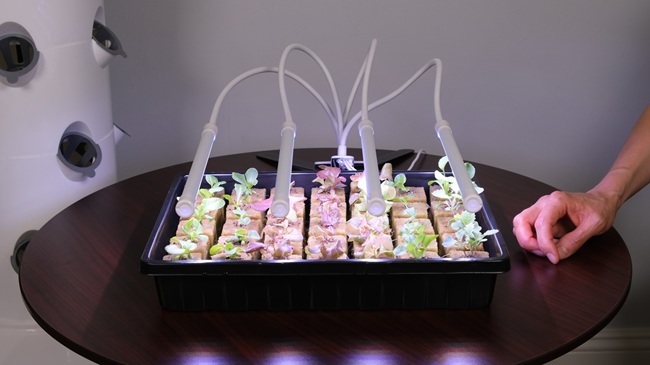
Some gardeners strategically use their grow lights throughout the day to replicate outdoor conditions, such as early morning dawn or evening dusk, in addition to providing extra light for growth. This helps promote stronger root development and prevents stunted growth caused by insufficient indoor sunlight levels. Making the most of this characteristic can be the difference between a successful and unsuccessful seedling establishment.
Choosing the Right Grow Light for Successful Indoor Seed Germination
For indoor seed germination to be effective, grow light selection is the key. Both LED grow lights and grow light bulbs are common choices, each with pros and cons of its own. While bulbs provide a higher intensity of light to facilitate photosynthesis and quicker growth rates, LEDs are generally more energy-efficient. The size of your growing area and the kinds of plants you want to grow should be taken into account when choosing the type of lighting to employ.
The majority of garden centers and internet merchants provide seed starting kits that include everything needed to create the ideal conditions for seed germination. These packages frequently include advice on how to maintain the ideal temperature range and amount of light for indoor seed starting. Many of these kits also have movable reflectors, allowing gardeners to modify the quantity of direct light on their seedlings without needing to buy more equipment.
When germinating seeds inside, using a high-quality grow light can help guarantee success by distributing light evenly across your growing space. It is also simpler to move freshly started plants outside or into larger pots once they have established themselves indoors when there is adequate illumination to support robust root systems and aggressive leaf development throughout the early phases of plant growth. Any gardening endeavor may ultimately be made or broken by the choice of grow light; making an initial investment in high-quality equipment can save time and money later on!
Things to Look for in a Good Grow Light for Seedlings
Grow lights for seedlings are not all made equal. To give your seedlings the greatest start possible, consider the following characteristics while comparing various lighting options:
- To promote photosynthesis and photomorphogenesis, use a grow light with both blue and red wavelengths. A well-balanced spectrum promotes robust and compact seedling growth.
- The distance between the plant and the light should be changed as seedlings get bigger. A flexible arrangement which allows the grow light to move farther back as seedlings grow improves management and reduces light stress.
- Tender seedlings are less likely to be scorched by lights that generate little heat. This is one of the advantaged of LED lighting.
- A regular light cycle, typically 12 to 16 hours each day, is beneficial for seedlings. Automated or built-in timers aid in maintaining regularity.
- Choose options with long-lasting LEDs or readily replacement bulbs that can last several growth cycles.
Optimal Grow Light Distance from Plants
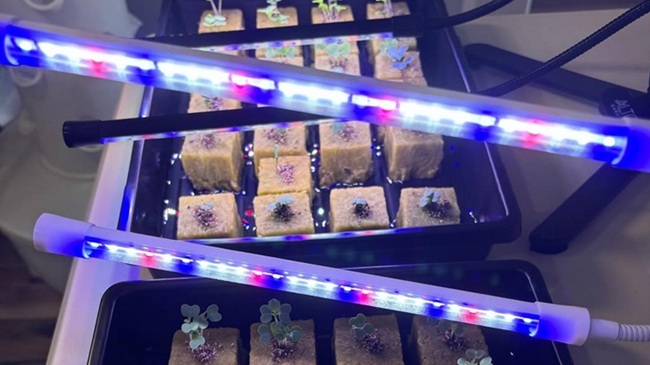
Light energy travels a shorter distance to reach the leaves of plants when grow lights are near them. More light energy is lost and never reaches your plants if your lights are farther away.
A grow lamp must have a minimum of 2000 lumens at a distance of six inches from the plant. The distance may be increased by approximately an inch for every 1000 lumens. This implies that my 30,000-lumen grow light system can be placed around 34 inches away from my plants and still be sufficient.
It might not be the worst thing in the world if your lights are too far away from your plants, but you will need to run them for longer to get decent results.
The Dark Cycle for Seedlings
Although seedlings can withstand constant sunshine, doing so often results in stress, which can cause poor growth or even sunburned or bleached leaves. Their innate circadian rhythm and healthy cellular development depend on the dark cycle.
Grow lights shouldn't be left on constantly for seedlings. For the purpose of resting, processing the energy they produced during the day, and transferring nutrients to their roots, plants need a certain dark period. Use an automatic timer to maintain a cycle of 12 to 16 hours of light and 8 to 12 hours of darkness for optimal results.
To keep your seedlings from becoming tall, thin, and feeble, keep your grow lights between two and six inches above their tops. As the plants develop, turn up the lights. Near your setup, place a tiny oscillating fan on low. Light winds encourage the plant to develop stronger, more resilient stems by simulating the outdoors.
Final Thoughts
Growing plants using grow lights for seedlings is not a precise science. There is no specific formula that tells you how long to keep your lights on at a certain distance. Observation is your most valuable tool. Observe your plants and look for signs that they require you to adjust the factors. If your seedlings are not lanky or reaching for the sun, are not turning yellow, and are growing daily, you will know that they are content and receiving adequate light.