Jun 10th 2026
How Does an Aeroponic Tower Work? A Beginner-Friendly Guide
Without the need for soil, aeroponic farming is transforming the production of fresh, nutritious crops. It should come as no surprise that this innovative method of growing is gaining popularity given its ability to grow plants anywhere, minimize water requirements, and promote development. This blog article has everything you need to know about aeroponic farming, including how it operates, why it's beneficial, and simple-to-follow instructions to get you started.
What is an Aeroponic Tower?
Growing plants in air without the need of soil or even standing water is known as aeroponics. A central chamber is surrounded by a number of vertically oriented plant locations in an aeroponic tower. Nutrient solution is dripped or sprayed over the exposed roots at regular intervals. This precise delivery allows for increased oxygen exposure while supplying nutrients and hydration.
An aeroponic system applies nutrients directly to plant roots, which improves nutrient uptake, speeds up development, and produces cleaner harvests.
Aeroponic Towers: Quick Pros and Cons
Pros
- Space-saving by growing vertically
- 3x faster plant growth
- 95% water savings compared to traditional farming
- Reduce risk of soil-borne pests
Cons
- Startup costs can be higher compared to traditional methods
- Not good for root vegetables, e.g., carrots and potatoes
- Water levels must be monitored
- It is electricity dependent
Aeroponic Towers: The Science Behind the System
The basic idea behind aeroponics is to regularly provide a hydroponic nutrient solution while maintaining plant roots hanging in the air. Here's a detailed explanation of how it operates:
- Plant Placement: Plants are placed within the tower's pockets or slots. The roots are exposed to the air and hang freely inside the central chamber.
- Watering Mechanism: Water containing nutrients is sent upward via the tower by a pump, then trickles back down with gravity, which irrigates the roots.
- Delivery of Nutrients: The nutrition solution makes sure the roots get a healthy combination of oxygen, water, and minerals—all of which are essential for development.
- Oxygen Access: The roots get enough of oxygen since they are not buried, which promotes quicker and more robust development.
Why Aeroponic Towers are so Effective
In the regulated atmosphere created by hydroponic towers, plants receive just what they require — neither more nor less. Plants don't waste energy looking for food when nutrients are delivered straight to the roots. They therefore grow more quickly and healthily than their cousins that are confined to dirt.
- Produce from a tower garden has a far lower carbon footprint since there is no shipping or storage.
- It encourages water efficiency since it uses as little as 2% to 5% of the water needed for conventional gardening techniques.
- Just a fraction of the area normally required for traditional produce is taken up by the vertical arrangement.
- Aeroponic towers are a closed system that minimizes waste by recycling all of its water and nutrients.
- Rich in pH-balanced ionic minerals and plant nutrients, these towers help grow strong, hardy plants that can fend off illnesses and pests, which lessens the need for pesticides and herbicides.
Aeroponic Towers for Home Use
There are several clear distinctions between commercial towers utilized in tower farms and home-use aeroponic towers. Home-use towers are standalone devices that are not connected to an autonomous irrigation system that resupplies nutrient water as needed, in contrast to commercial towers. Rather, it is necessary to manually refill water and nutrients every few weeks on average. This is a straightforward procedure that entails mixing nutrients with water and adding it to the reservoir. Because pumps in residential towers are smaller than those in commercial systems, they also operate efficiently and silently.
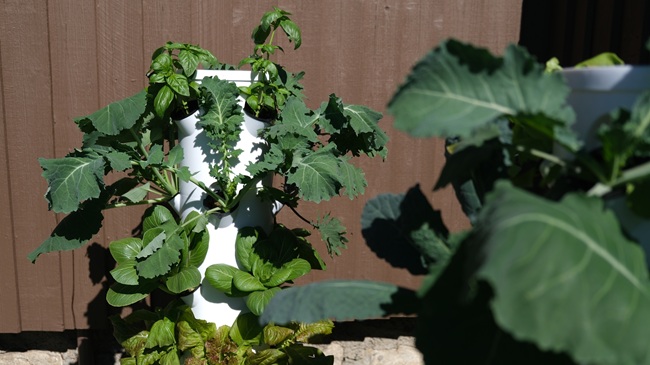
How to Set up an Aeroponic Tower at Home
Most people are surprised at how easy it is to set up an aeroponic system. First, pick a dependable aeroponic tower that fits your family's size and available area. Choose whether to put it outside or indoors. LED grow lights are a must if you're indoors and usually an option for most towers. That is why we recommend buying a system with built in grow lights like our grow tower with lights if growing indoors.
After that, add the suggested nutrition solution to the reservoir along with clean water. Set the timer to run the water pump for 15 minutes per hour, 14 to 16 hours daily after placing seedlings in the net pots.
Maintenance Tips for Your Aeroponic Tower
- Check the water: For seamless functioning, check the water level and pH readings weekly
- Take control of the environment: The ideal temperature range for most plants is 65–75°F. Set your timer to provide 14–16 hours of lighting every day, depending on your crop.
- Examine plant leaves: Look for indications of nutritional deficits or yellowing leaves, and make any necessary adjustments.
- Be clean: Clean your system in between runs to prevent obstructions and microorganisms.
Final Thoughts
One of the most sophisticated, effective, and fashionable methods of growing food at home is using aeroponic towers. With better oxygenation, quicker growth, and less resource use, they improve on the greatest features of hydroponics, such as site density, nutrient management, and indoor usage.
ALTO Garden aeroponic towers are designed for today's growers, who need hygienic food, a streamlined aesthetic, and reliable automation. Aeroponics offers a more intelligent way to raise greens for flavor, health, and nutrition.