Mar 6th 2025
How to Build a Vertical Vegetable Garden for Small Spaces
What is Vertical Gardening?
Vertical gardening is an alternative gardening technique that expands the possibilities of growing plants in a vertical environment. It is a unique type of urban gardening that works well in limited places, especially for decorating walls and roofs in different styles. Indoor vertical farming often uses efficient growth systems like vertical hydroponic systems, aquaponics, or other soilless agricultural techniques, where crops are grown in stacked levels.

There are a few key features to keep in consideration while building a vertical garden. Like light exposure, watering, drainage, and plant spacing.
- Ensure there will be enough light for the plants you choose.
- Because the soil in vertical gardens can dry out rapidly, they need to be watered frequently.
- In order to avoid waterlogging, make sure the structure has adequate drainage.
- Plants should be spaced apart to allow them adequate airflow.
How to Build a Vertical Garden?
Choose a structure, such as a terrace, trellis, tumbling, hanging planters, or a wall-mounted pocket planter system, to create a vertical vegetable garden. Then, plant climbing or vining vegetables, like tomatoes, beans, cucumbers, or herbs, making sure they have the support they need to grow upward by tying them to the structure as necessary. When choosing your location and plant varieties, take into account things like sunlight exposure and water availability.
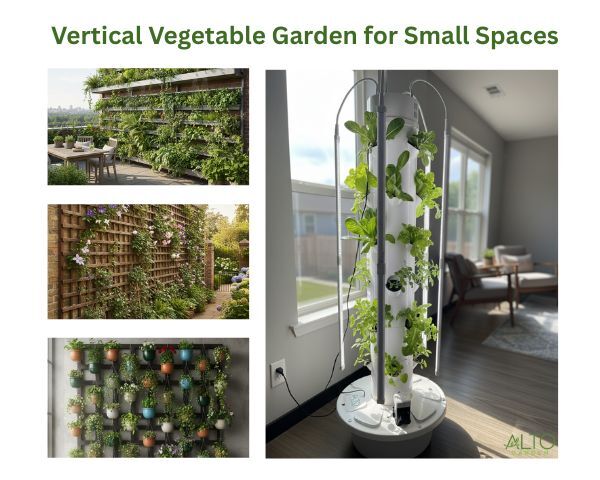
Vertical Garden Structure Ideas
Terrace
Terracing is the process of creating multiple steps into a sloping hillside. If you live next to a hillside, this can be a great option. Each of these steps is higher than the one before it, making them progressive.
This technique has been used to cultivate vertical landscapes and save water. The Hanging Gardens of Babylon is a well-known example of terraced agriculture, which was practiced by the Romans, Incas, and other ancient societies.
In parts of Southeast Asia, rice fields are planted on terraced slopes, creating exquisite artificial landscapes.
Trellises
Trellising is another excellent way to grow fruits and vegetables. Many types of vegetables grow particularly well when trellised. Cucumbers, beans, and peas naturally tend to vine. Due to their small root systems and innate upward growth, these plants can be planted close together, maximizing planting space. You can also guide little squash, tomatoes, and melons upward by trellising them.
Hanging Planters
Growing plants downward from a hanging planter is called tumbling. If you have more airspace than floor space, you might want to hang one or two planters from your ceiling, eaves, window ledge, or railing.
Strawberries, cherry tomatoes, herbs, and bush beans grow very well over the edges of hanging planters, giving you fresh food that "tumbles" down into your vertical growing space. While most hanging baskets are made for flowers, any supported container can work just keep in mind that wet soil can be heavy.
Cherry tomatoes, strawberries, bush beans, herbs, and even tiny cucumbers can all be grown in hanging planters of some kind. Vegetables that resemble vines and fall over the edge are particularly good at making use of vertical space. Because hanging planters typically have a restricted size, it's important to avoid planting anything too large.
Tower Gardens
A vertical farming technique called the hydroponic tower garden uses nutrient-rich water solutions to grow plants without the need for soil. Because hydroponic tower gardens have a consistent supply of water and nutrients, they produce exceptionally high yields. Plants grow faster and more efficiently.
Numerous crops, including strawberries, lettuce, Swiss chard, herbs, spinach, kale, broccoli, and blooming petunias, can thrive in these systems. Tower gardens can be purchased online, and many have been used for over a decade due to their long lifespan in hydroponic and aeroponics industries.
Start Your Vertical Garden Today!
Explore our easy-to-use vertical hydroponic systems - perfect for small spaces and big harvests. Fresh vegetables and herbs are just a few steps away.
Shop NowThe Best Plants for Vertical Gardens

One excellent example of a plant that may be trained vertically is the cucumber. From the moment a cucumber has its first few leaves, it begins to unroll its tentacles, taking hold of the nearest support. It can attach itself to the stem of a nearby plant, a wire rod, wooden fence, or metal railing. The plant builds its vine by climbing upward and outward with this support.
Any material can be used to create a trellis for each plant in a city garden; just make sure it is less than half an inch thick so the plant can grasp it.
Any plant that grows well in a container will also thrive in a vertical garden. Plants with shallow roots, like annual flowers, vegetables, and herbs, flourish in containers more than perennials. Trailing vines create a lovely effect along fences, trellises, and other upright structures.
Vegetables require a deep root system to flourish, so they are often not the best choice for vertical gardening, but you may still try other possibilities. Because of their shallow root systems, leafy greens—like spinach or lettuce—are good for container and vertical gardening. Because of their thin root systems, herbs like mint, parsley, and rosemary are also excellent choices for vertical planting.
- Vegetables than climb: melons, cucumbers, tomatoes, peas, and beans (runner and pole beans).
- Herbs for vining: cilantro, mint, and basil
- Trailing plants: creeping jenny, strawberries
Leafy greens like spinach and lettuce are ideal for vertical and container gardens due to their shallow root systems. Herbs such as mint, parsley, and rosemary are also excellent choices for vertical planting.
Final Thoughts
With techniques like hydroponics and aeroponics becoming more popular, vertical farming has a bright future. These methods allow plants to grow vertically without soil, creating new opportunities for urban greenery.
Vertical gardens help urban areas maximize space and greenery. Following detailed instructions, anyone can design and care for their own vertical vegetable garden. Promoting awareness of vertical gardens in urban environments encourages further exploration and innovation in sustainable city gardening.
FAQs
- Can I grow vegetables in a vertical hydroponic system?
Of course! Using nutrient-rich water to nourish your plants, a vertical hydroponic system allows you to grow vegetables like lettuce, spinach, tomatoes, cucumbers, and herbs without the need for soil.
- Which vegetables are best for a vertical vegetable garden?
Great vegetables to climb and vinify include beans, peas, tomatoes, and cucumbers. Vertical arrangements are also ideal for herbs like basil, parsley, or mint, as well as leafy greens like spinach or lettuce.
- How should my vertical garden be maintained?
Ensure that your plants receive adequate sunlight, receive regular watering, have adequate drainage, and are spaced apart to allow for airflow. Using a hydroponic system can help your plants grow more quickly and makes things even easier.