Aug 14th 2026
What Is Hydroponic Gardening And How Does It Work?
Remove a plant from soil, and a lot of people will say it'll die after just a few days. However, hydroponic gardening proves otherwise. There is no soil used instead, the roots of a plant are soaked in a nutrient solution of water, and the plants grow quicker and are larger than if they were grown in a garden bed.
If you've ever asked yourself how a head of lettuce manages to sprout without a speck of soil, wonder no more. Hydroponic cultivation removes the medium of soil to supply only the essentials for a plant to grow (water, nutrients, light, and oxygen at the roots) and provides them directly, eliminating soil as an intermediary.
What Is Hydroponic Gardening, Exactly?
Hydroponic gardening is a process in which plants are grown using a soil-less medium, where the nutrients for the plants are provided using a water-based nutrient solution. "Hydro" means "water," and "ponos" means "labor" in Greek, which is a perfect name for this kind of growing process since it is almost fully based on the action taking place in water.
Soil serves the plants in three ways: anchoring the roots, holding water, and containing nutrients. But in hydroponic gardening, these three things are divided into separate processes.
For example, a planting medium such as clay pebbles or rockwool cubes anchor the plants, water is held in a reservoir tank, and nutrients are given to plants through a mixed nutrient solution. Hydroponic plants don't use energy to search for nutrients in the soil, and they can use the extra energy for growing. That is one of the reasons hydroponic gardening is faster than soil-based growing and also the reason for the popularity of hydroponics among people who don't have outdoor gardens.
How Does a Hydroponic Gardening System Work?
Every hydroponic gardening system solves three problems – the supply of nutrients, getting oxygen, and keeping the right chemistry of the water. It is true regardless of the complexity of the system, from commercial greenhouses to hydroponic home gardening.
Supply of Nutrients. Hydroponics uses the combination of water and mixed nutrients consisting of nitrogen, phosphorus, potassium, calcium, and magnesium.
Oxygen in the roots. This is the area where beginners usually make mistakes. Roots immersed in fully anoxic and stagnant water develop root rot, so most hydroponic systems provide air in the area of the root zone (aeroponic towers), water running over the roots (nutrient film technique), or oxygenation of the water with the help of an air stone and pump (deep water culture).
pH and nutrient availability. Normally hydroponic plants prefer the pH range from 5.5 to 6.5. Outside of that range, plant roots cannot uptake some of the nutrients even if they are present in the solution, meaning that a plant might be completely in a nutrient solution but suffer from nutrient deficiency due to the wrong pH.
Popular Types of Home Hydroponic Growing Systems
Indoor hydroponic cultivation does not refer to a specific technique. There are different designs and each appeals to a different type of grower.
Deep water culture (DWC). Plant roots are suspended in water. Very easy to make and simple to use for beginners, although this technique is best suited for fast-growing plants like leaf lettuce and basil but not for plants bearing fruit.
Nutrient film technique (NFT). Utilizes the flow of a thin film of nutrient solution underneath the roots through the inclined channel. Little amounts of water and nutrient solution are used, but one pump failure can cost your crop, making the system dependent on the constant source of electricity.
Ebb and Flow. The tray expands with the nutrient solution in accordance with the schedule, and then all the solution returns back to the reservoir. Allows roots to get a constant supply of oxygen during non-flooding period and accommodates plants of varying sizes.
Vertical aeroponic towers. Roots hang inside a column while a nutrient solution is dripped or misted over them at intervals, which exposes them to more oxygen than any submerged method. This is the setup behind most hydroponic farming towers, since the vertical design fits dozens of plants into roughly three square feet of floor space - a real advantage for anyone growing indoors or on a small balcony.
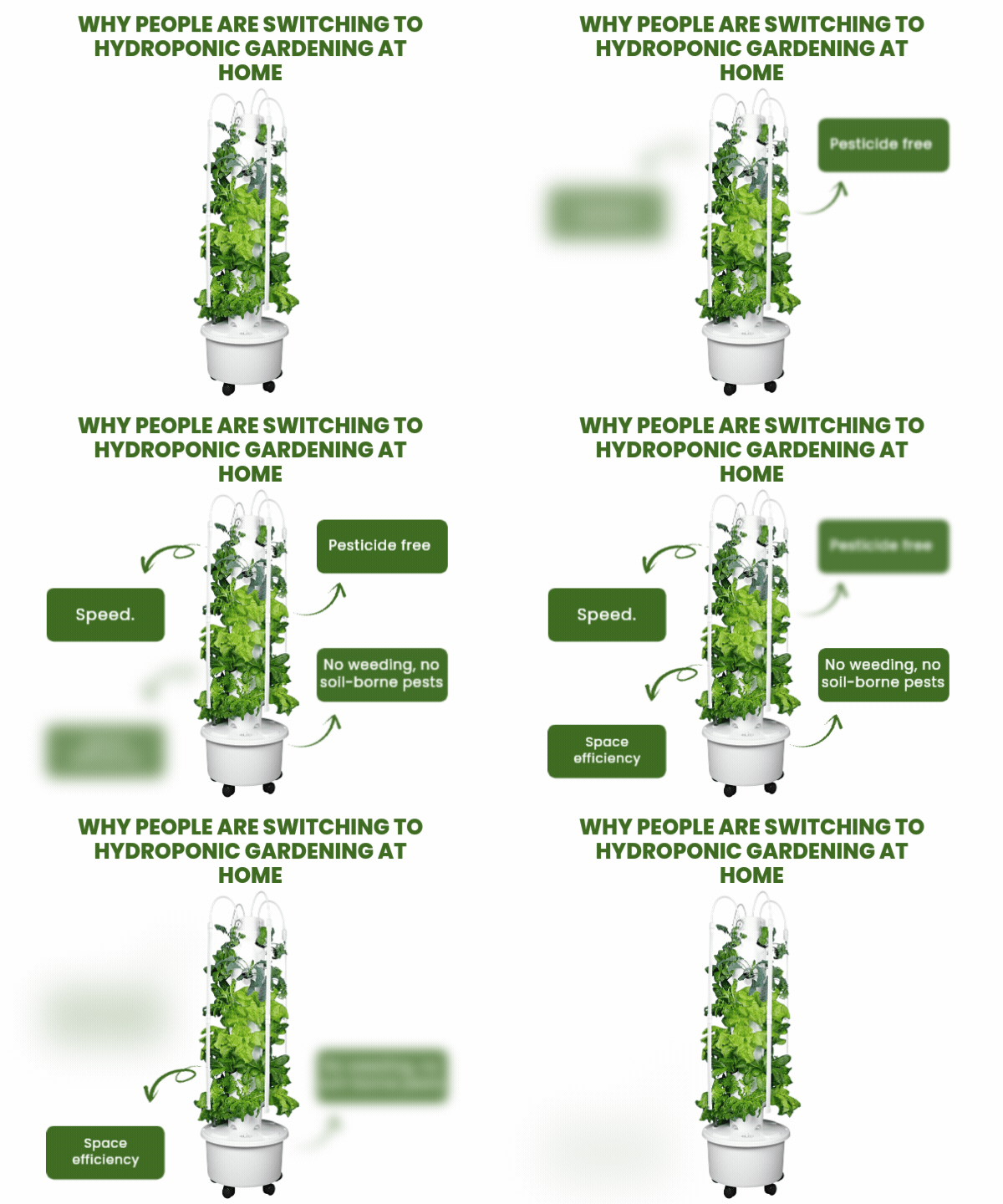
Why People Are Switching to Hydroponic Gardening at Home
Hydroponic home farming is not a matter of coincidence. Its advantages over a soil-based garden bed are obvious and can be easily measured.
Fast-growing. Since all the nutrients and oxygen are provided directly to the plant instead of migrating through the soil, plants in hydroponics mature much faster than in soil. A head of lettuce that usually matures in 60-70 days in the garden can be harvested in 30-40 days in hydroponics.
Water use. Closed hydroponic systems reuse the same water, which is the reason why these systems require 95 percent less water than soil gardening for the same yield.
No weeding, no soil-borne pests. Since there is no soil, there are no places for weed seeds to germinate and fewer places for the soil-borne pests to hide. It is not completely pest-proof (fungus gnats and aphids can still appear), but the number of pests is definitely lower.
Space efficiency. Vertical hydroponic systems, such as ALTO Garden towers, allow growing dozens of plants into just three square feet of space, which is an obvious advantage for any indoor grower.
Setting Up Home Hydroponic Farming for the First Time
Starting a beginner hydroponic gardening setup is actually pretty simple equipment-wise. Beginners often stumble over the sequence they set things up in, not what they use, so do these things more or less in order.
Pick the system type. A small DWC bucket or a compact tower is the best starting point for hydroponics; NFT and ebb and flow setups are more suitable for people who are familiar with hydroponics.
Choose the growing medium. Rockwool cubes, clay pebbles, or coco coir can be used to keep the seedling in place without soil.
Mix the nutrient solution. You should follow the instructions regarding the concentration of the solution (ML per gallon) and test the pH before adding seedlings.
Add oxygenation. Add an air pump and stone for DWC, or a timer-controlled pump for NFT. Aeroponic don't need additional oxygenation, since towers suspend their plant roots in air.
Set the lighting schedule. Leafy greens usually require 14 to 16 hours of light per day; fruiting plants like tomatoes require 16-18 hours.
Maintenance Tips for a Healthy Hydroponic Gardening System
- Check pH weekly; it varies since the plants absorb the nutrients unevenly.
- Keep an eye on water levels. When water gets low, we recommend treating fresh water with nutrients in a separate bucket and mixing well. Then, pour the treated water into the reservoir to top off.
- Clean the pumps and misting nozzles once a month; mineral buildup is the most common cause of a sudden bad performance of the system.
- Check the roots. Healthy roots should be white or pale tan. Brown, slimy roots are an indication of oxygen shortage or root rot.
Final Thoughts
Hydroponics is neither a fad nor a science project but a more effective way to provide a plant with nutrients. When the pH levels are right and roots have a constant supply of oxygen, the hydroponic system works mostly by itself with quick leafy greens in a month and ever-growing herbs.
FAQ
- Can I move a plant from soil to hydroponic gardening midway through its growth?
Yes, but it is a risky thing to do because of the need to rinse the roots thoroughly. This step is necessary in order to avoid introducing the bacteria into the system and clogging the pumps. Also, be prepared for the shock period, which lasts for a few days. - Why do my hydroponic plants look healthy one day and wilted the next?
This is most likely a problem with oxygen supply or a pump failure. Check the water circulation within minutes after wilting, since roots without oxygen or water can die in just a few days. - Is a vertical aeroponic tower better than a basic DWC bucket for a first-time grower?
The DWC bucket is easier to use and has fewer parts to fail, so it is a better choice for beginners. However, the tower system fits more plants in a smaller space and allows for a better oxygen supply, so it is worth the learning curve. - Can root vegetables like carrots be grown in hydroponic gardening systems?
Root vegetables do not grow well in hydroponic systems. Most hydroponic systems are designed for leafy greens, herbs, and fruit-bearing plants whose roots do not need to expand underground.