Apr 9th 2025
What Is Rockwool for Hydroponics? Everything You Need to Know
Quick Summary: Rockwool is spun molten rock compressed into cubes, and it works as a soil replacement in hydroponics because it holds moisture without drowning roots. Soak the cubes for 10 minutes, drain for 10, plant two seeds per cube, cover with vermiculite, mist daily, and wait. Once you see roots coming out the bottom and four leaves on top, the seedling is ready to move into your tower or system. ALTO Garden's 1.75" x 1.75" cubes are sized to fit directly into their net pots without needing extra media to stabilize them.
Rockwool is used as a growing medium in hydroponics (instead of soil). It is created by spinning molten rock into fiber. These fibers are compressed and then shaped into slabs or sheets. They are easily broken apart into cubes and frequently used from the seedling stage.
Rockwool has superior moisture-retention and aeration qualities due to its internal density. Your plant can get oxygen and the fertilizer solution thanks to the special moisture gradient that runs from top to bottom. There are several advantages to growing plants in rockwool, and it is highly adaptable to different systems.
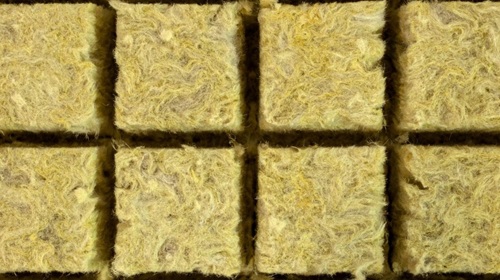
What Are the Advantages of Using Rockwool Cubes in Hydroponic Gardening?
One of the key advantages of using rockwool cubes is their remarkable ability to retain water, as well as their special wicking properties that facilitate moisture absorption by roots. When paired with good ventilation, rockwool cubes provide a highly oxygenated root zone environment that promotes strong roots and general plant health.
Items made with rockwool are sterile. This helps reduce the chance of viral or bacterial contamination into the growth system.
Growers also find rockwool to be a useful option because you can use different size cubes to suit your needs. You may feel secure knowing that your rockwool substrate won't break down and deteriorate over time during the growth cycle. It will be robust and maintain its appropriate water retention.

How Do You Use Rockwool Cubes in a Hydroponic System?
Soak and Drain Cubes
When you open your package of rockwool the cubes will be dry. The first step is to soak the cubes in water for 10 minutes. Place your cubes in a germination tray and pour water into the tray until the water line is roughly halfway up the cube. The cubes do not need to be completely submerged, since the wicking properties of rockwool will wick the water to the top of the cubes.
After 10 minutes of soaking, move the cubes over to the bottom of your kitchen sink. Drain them for 10 minutes. Just let them sit there at the bottom of this sink and they will slowly drain out excess water.
Sowing
Most cubes come with a small hole where you can plant your seeds. If your cubes didn’t come with any holes, use a skewer or thin pencil to poke your own holes. Place two seeds into the holes of each cube. If the seeds are really small (e.g., lettuce) you can use a moistened toothpick to help pick up the seeds and place them into the cubes. Carefully plant the seeds in the hole and then sprinkle a little vermiculite on top of the holes to cover. Vermiculite has excellent water retention properties and will help your seeds from drying out.
Mist Cubes with a Spray Bottle
After sowing your seeds and sprinkling vermiculite on top, spray the top of the cubes with a spray bottle. This will moisten the vermiculite as well as moisten the top of the cubes to ensure the cubes are adequately hydrated.
Growing Requirements
To make handling easier, keep the seeded rockwool cubes together in a tray or container. You may retain humidity by creating a mini-greenhouse effect using a plastic dome or plastic wrap. The tray with the rockwool cubes should be placed somewhere where temperatures won’t fluctuate too much. The ideal temperature for germination is between 65 and 80 degrees Fahrenheit. You can also place the tray in a greenhouse or beneath grow lights for optimal results.
Check the spacing requirements for the particular plant and make the necessary adjustments. To promote air circulation and avoid crowding, which can hinder plant growth, provide adequate space between each cube.
Maintenance
Rockwool cubes are relatively easy to maintain. Make sure the cubes are properly hydrated but not soggy by regularly checking their moisture content. Check on them daily and mist them once a day with a spray bottle.
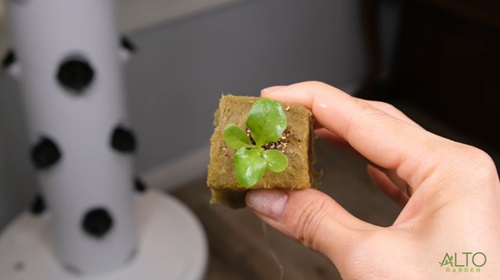
Transferring Seedlings to the Hydroponic System
Seedlings are ready for transplantation once you can see roots emerging from the bottom of the cube and produced four leaves. The first two leaves you see aren’t actually leaves, they are called cotyledons which are parts of the seed embryo. Wait until two more leaves form after the cotyledons (four “leaves” total).
Transfer the seedling into the net pot, being careful to handle the cube and not the plant. Make sure the rockwool cube is inserted all the way down into the net pot, so the bottom of the cube is touching the bottom of the net pot. This will help ensure watering of plant roots.
Grow Healthy Roots with Rockwool Cubes
Give your seeds and cuttings the ideal start with Rockwool Cubes designed for strong root development and successful hydroponic growth.
Buy NowCan you Reuse/Repurpose Rockwool Cubes?
It is generally advised not to re-use rockwool, since they may start to host mildew or fungus after a period of use. Should you decide to repurpose your cubes, let the roots within dry fully before sterilizing them by immersing them in hot water for ten minutes or more.
Key Takeaways- Soak cubes for 10 minutes, and drain for 10 minutes before planting. Don't skip the drain step; soggy cubes cause more problems than dry ones.
- Two seeds per cube. If both sprout, remove the weaker one early rather than letting them compete.
- Cover seeds with vermiculite after planting. It holds moisture at the top of the cube where seeds need it most.
- Mist daily. Rockwool dries out faster at the top than it looks, check it every day.
- Transfer when roots are visible at the bottom of the cube and four leaves have formed. The first two aren't true leaves, they're cotyledons, so wait for the next two.
- Don't reuse rockwool unless you sterilize it thoroughly. Mold and fungus build up fast in used cubes.
Frequently Asked Questions
- What are the uses of Rockwool Cubes?
Rockwool cubes are used in hydroponics as a substitute for soil, giving plant roots a sturdy and manageable environment to grow. They are sufficiently adaptable to be used for seed starting, cutting propagation, and mature plant growth. - What Rockwool Cube Size Should be Used for Hydroponic Systems?
The rockwool cube should be small enough to fit into your net pot but big enough so that it doesn’t wobble around in it. Otherwise, you’ll need to add supporting media such as clay pebbles to stabilize the cube in the net pot. Ideally you want to have a snug fit without using other media. ALTO Garden rockwool cubes measure 1.75” x 1.75” and are specifically designed to provide a snug fit into our ALTO Garden net pots and towers. - Can rockwool cubes be reused?
Technically yes, but most growers don't bother. After one grow cycle, the internal fibers start hosting mildew and residual root matter. If you want to try, let the roots dry out completely first, then soak the cube in hot water for at least ten minutes to sterilize. It's more work than it's worth for most home setups. - Do rockwool cubes need to be pH adjusted before use?
Yes, and this is one step many beginners skip. Rockwool is naturally alkaline, sitting around pH 7 to 8 out of the bag. Soaking it in pH-adjusted water (around 5.5 to 6.0) before planting brings the pH into the range that roots can actually absorb nutrients from. Skip this, and your seedlings may struggle even with a perfect nutrient solution.