Oct 21st 2026
How an Indoor Hydroponic Garden Can Reduce Grocery Costs
Growing your own herbs, leafy greens, and fruits at home can cut your grocery spending. If you often buy fresh produce that spoils before you use it, grow your own indoor hydroponic garden. This will allow you to harvest what you need when you need it. This will result in less trips to the store and less food wasted.
Here’s which crops give you the most value, what an indoor hydroponic garden costs, and what it takes to make growing at home worth it.
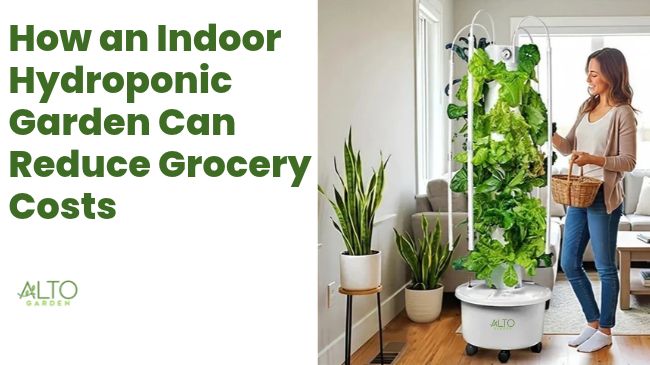
Where Grocery Money Goes on Fresh Produce
Some produce is more expensive than others. Fresh herbs, specialty greens, and strawberries can be pricey, especially when they are sold in small quantities.
Take a half-ounce package of fresh herbs at $3.00. That’s $6.00 per ounce, or $96.00 per pound! If you cook with fresh herbs several times a week, it adds up fast. Waste makes it worse. You buy basil or parsley for one recipe, use a little, and toss the rest when it wilts. You paid for the whole bunch but only used a small portion.
Both issues can be solved with a hydroponic indoor garden. Instead of buying a bunch of herbs you'll never use, only harvest what you need from your tower. Leave the rest and it will continue to grow.
How an Indoor Hydroponic Garden Can Lower Your Grocery Bill
The savings come from a few things, depending on what you grow, how often you harvest, and what you spend at the store.
1. Harvest Only What You Need
If you use basil in a recipe, you don’t need the entire bunch. Just choose a few leaves and leave the rest of the plant and it will continue to grow. Leafy greens work the same way. Harvest only what you need for your salad, and you'll have fewer veggies sitting around in your refrigerator.
2. Make Better Use of Your Growing Space
Hydroponics systems deliver water and dissolved nutrients straight to the roots without soil. Vertical towers stack planting spaces on top of each other. A tower with 24 planting sites lets you grow a lot of plants in a small footprint. Picking productive crops and keeping every site in use helps you get the most out of that space.
3. Grow Fresh Produce Throughout the Year
Outdoor gardening follows the seasons and local weather conditions. With an indoor garden you have more control, especially if you have a system that has grow lights and timers. You can continue to grow herbs and leafy greens in the winter or during times when the outdoor weather is not ideal.
4. Reduce Produce Waste and Unnecessary Packaging
Stores sell produce in pre-packaged sizes. This makes it difficult to buy small amounts. Gardening allows you to choose when and how much to harvest. It also reduces packaging waste which is good for the environment.

How Much Does an Indoor Hydroponic Garden Cost?
One of the biggest factors to consider is the initial cost. Indoor hydroponic towers can range from $500 to $1,000, depending on size, features, and whether grow lights are included. The ALTO Garden GX Hydroponic Tower, for example, is priced at $600 - $700 and comes with grow lights and basic supplies like net pots and rockwool cubes. Automated timers handle the watering and lighting schedule.
Check what’s in the box before you buy. A cheaper tower may need more lighting or accessories. A set up that’s complete will cost more upfront but leave you with less items to purchase separately.
The Math: Can a Hydroponic Tower Pay for Itself?
Here’s a simple example with a 24-site tower.
Say you grow lettuce, harvest it in cycles, and replant the empty sites. For this example, assume 8 cycles in a year, with each site producing one head of lettuce.
24 plants × 8 cycles = 192 heads of lettuce per year.
This table shows what 192 heads might cost at the store.
| Store price per head | Annual retail value |
| $3.00 | $576 |
| $3.50 | $672 |
| $4.00 | $768 |
So yes, a hydroponic tower can pay for itself!
But even better - you're eating food which hasn't been treated with pesticides and chemicals. You know exactly what's in your food because you've grown it yourself.
What if You Grow Herbs Instead?
Herbs cost much more per ounce than lettuce. This is how you can reduce your bill even further.
Say you regularly buy three packages of fresh herbs a week at $3.00 each.
Three packages × $3.00 × 52 weeks = $468 per year.
That’s what these purchases cost annually if your shopping habits don’t change. Growing enough herbs to replace these packages could save a significant amount of money. The actual savings depend on how much your garden produces and how much you’d otherwise buy. And a tower full of lettuce can’t also grow the same harvest of herbs, so you need to account for the space you give each crop.
Best Crops for Saving Money in Indoor Growing Systems
In most indoor growing systems, aim for plants where the store price per ounce is high and the plant grows fast in a tower.
- Herbs: Basil, dill, parsley, and cilantro are your best bets here since herbs are very expensive per ounce. Plus, they're easy to grow in a hydroponic tower.
- Greens: Lettuce spring mix, butterhead, kale, spinach, and chard are easy to germinate and quick-growing.
- Strawberries: High-priced at the grocery store and well-suited to growing in towers.
- Tomatoes and peppers: Only worth cultivating if you eat them frequently and provide sufficient lighting.
Which Vegetables Should You Keep Buying?
Carrots, potatoes, and onions don’t suit vertical hydroponic towers built for leafy crops. They need different growing conditions and usually more room for their roots or bulbs to develop. They’re also cheap and store well, so growing them indoors won’t save you as much as growing fresh herbs or specialty greens.
For most households - it makes more sense to focus on a few high-value crops, instead of trying to grow everything.
Tips to Get the Most Savings From Your Garden
- Stagger your planting. Plant new plants every few weeks so that the produce isn’t all ready at once.
- Start your own seeds. They’re a fraction of the price of buying plants from the nursery, and rockwool cubes make it easy to germinate.
- Run the timers as intended. An example for the watering cycle would be 15 minutes every hour for 14 hours, with the grow lights operating for 14 to 16 hours a day.
- Grow what you’ll actually eat. If no one in the house eats kale, all those kale plants won’t save any money.
Final Thoughts
Your indoor hydroponic garden isn’t going to replace all the items you buy from the grocery store, nor will it make you money right away. However, it can take some of the costliest, most perishable foods out of your refridgerator. Choose crops that have a high cost per ounce, fill your planting slots with them, and you’ll soon be able to justify owning an indoor hydroponic garden. The ALTO Garden GX Hydroponic Tower is designed for just this purpose.
Frequently Asked Questions
- How much can an indoor hydroponic garden save on groceries each year?
It depends on your crops and local prices. In the example above, one tower of lettuce is worth roughly $576 to $768 a year at store prices. Growing herbs can add several hundreds more. - Is a hydroponic indoor growing system worth it for one person?
It can be if you focus on herbs and premium greens, since one person rarely finishes a whole clamshell of herbs before it wilts. Harvesting only what you need cuts waste, which matters most in a small household. - What are the ongoing costs of indoor growing systems?
Expect to pay for seeds and nutrients. Water use is minimal, since water is re-circulated inside the tower, one reason why indoor growing systems are cheap to run. - Which crops save the most money?
Fresh herbs, strawberries, and specialty greens usually save the most, because they cost the most per ounce at the store. - Do I need gardening experience to run one?
No. Hydroponic towers use automated timers for watering and lighting, and assembly takes about 20 minutes with no tools. Once the timers are set, growing becomes highly automated.