Apr 9th 2026
How Much Space Do You Need When Planting a Tower Garden?
With a tower garden, nutrient-rich water is directed to flow through the system, giving plants what they require to flourish. In addition to saving space, this kind of hydroponic system also encourages quicker development since it gives plants greater access to water and nutrients.
This guide describes how much space hydroponic plants require, why spacing is important, and how crop type and system design affect requirements. It also provides useful tips for making the most of available space in hydroponic systems.
What is Hydroponic Plant Spacing?
The distance between plants that permits sufficient space for root growth, canopy expansion, ventilation, and light penetration is referred to as hydroponic plant spacing. Because plants in hydroponic systems share a limited supply of nutrients and oxygen, they must be spaced precisely, unlike soil-based systems.
Plants still need enough space above and below the growth surface, even though hydroponic systems are built to maximize space economy. Inadequate spacing can increase competition for light and nutrients, limit root development, and decrease oxygen availability.
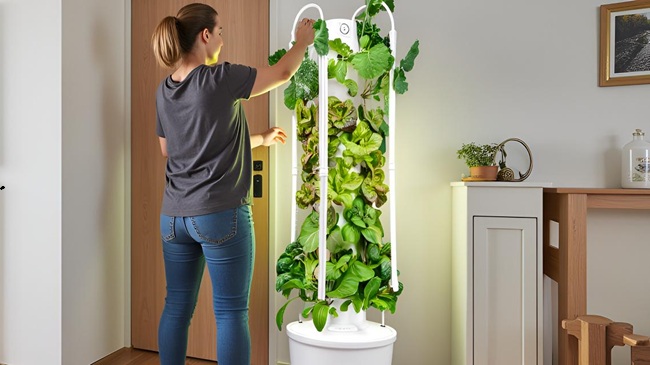
In addition to providing uniform airflow and light exposure throughout the crop canopy, proper spacing enhances system access for maintenance, pest control, and harvesting.
Understanding the Importance of Spacing
When designing a hydroponic garden, plant spacing is a crucial element that is occasionally disregarded. The good news is that you can grow more plants in the same area with hydroponics than with soil gardening. Hydroponic plant spacing differs from typical soil gardening plant spacing. Plants still require room to extend their roots and leaves, though.
You will have poorer yields and a higher chance of illness if you grow your plants too near to one another. Plants require lots of light and sufficient ventilation to help avoid infections. If you place them too near to one another, they may not receive enough light since their leaf will overlap and they will block each other's light. In order to maximize your growing area and improve yields, we'll discuss hydroponic plant spacing for a range of various plants in this post.
Regarding how near plants may be in hydroponic systems before growth becomes harmful, there doesn't appear to be agreement. The kind of plants you're cultivating and how frequently you pick them will determine this. It goes without saying that larger plants, like tomatoes, require more room than smaller ones, like lettuce. Additionally, most home gardeners prefer continuous harvesting, where they simply pluck a few outer leaves of lettuce at a time and let the plant continue, whereas professional farmers harvest a full mature plant in a single session.
By promoting uniform plant growth and effective resource utilization, proper plant spacing enhances the performance of hydroponic systems. Sufficient distance guarantees consistent exposure to light, enhancing photosynthesis and production potential. Additionally, it improves ventilation, which lowers illness pressure linked to humidity. Throughout the crop cycle, proper spacing reduces plant stress and improves growth stability by giving roots steady access to water and nutrients.
Plant Spacing for Herbs
Basil and chives, for example, usually do best when spaced 6–10 inches apart. Aeroponic systems may need a somewhat larger spacing of 8–10 inches to facilitate root watering patterns, whereas wick systems typically utilize 6–8 inches.
Plant Spacing for Leafy Greens
When it comes to hydroponic plant spacing, most leafy greens and lettuce require 6 to 8 inches of space if you wish to harvest them all at once. In our experience, you may grow them with 4 inches between plants if you want to collect them continually.
Plant Spacing for Large Plants
According to some publications, larger plants—like tomatoes, peppers, or beans—should be spaced 18 inches apart, but in our experience, this may be a bit too much. Larger plants can grow with a space of 12 inches if they are properly pruned.
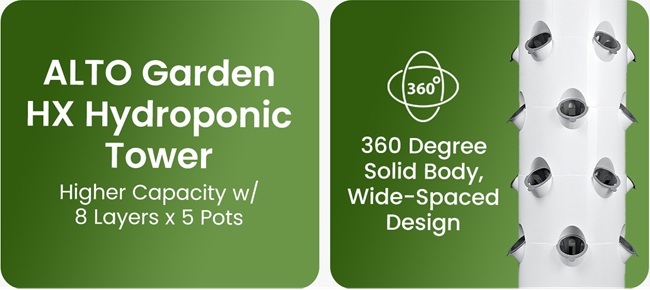
Wider spacing of 18–24 inches is beneficial for crops like peppers and cucumbers in order to promote fruit growth and canopy expansion. With a tower garden you can achieve more space between plants by skipping pots if needed, e.g, planting 2 plants per level instead of 4 plants per level.
Benefits of Plant Spacing
Root Space
Root systems may grow freely when there is enough space between them. Insufficient space can restrict the availability of oxygen and the absorption of nutrients in hydroponic systems, where root zones are frequently limited. Healthy root development and more steady plant growth are encouraged by appropriate spacing.
Airflow and Disease Prevention
When plants are grown too near to one another, ventilation is restricted, which raises humidity levels around foliage and fosters bacterial and fungal illnesses. In addition to lowering the danger of insect and disease outbreaks, adequate spacing enhances air circulation and minimizes moisture buildup.
Light and Nutrient Distribution
Proper spacing keeps bigger plants from shadowing smaller ones and guarantees even light distribution throughout the canopy. Additionally, it lessens competition for dissolved oxygen and nutrient solution, which has a direct impact on growth rate and yield uniformity.
Healthy Competition
Competition for water, nutrients, oxygen, and light is increased by overly close spacing. Every crop may grow under stable conditions when the proper spacing between plants is maintained, which enhances system performance.
Final Thoughts
Hydroponic towers are a dependable and sustainable production method because they provide excellent yields, effective water usage, and perfect environmental control when spacing is properly handled.
While fruiting crops like tomatoes and peppers need broader spacing to facilitate canopy growth and ventilation, leafy greens may survive high-density spacing. Pruning, training, and vertical growth methods can all increase space economy without sacrificing plant health.
Food production is being revolutionized by vertical tower gardens, which increase farming's productivity, sustainability, and accessibility. Investing in a tower garden may result in fresh, superior fruit with no environmental effect, whether you're an urban gardener, commercial grower, or someone interested in sustainable agriculture.