Jul 4th 2026
Indoor vs. Outdoor Grow Tower Gardens: Which Is Right for You?
Outdoor tower gardens use natural sunlight which plants love, so they use less electricity. However, outdoor tower gardens limit your growing season and expose you to pests, wind, and temperature changes. Indoor grow towers need lighting, which can be expensive, but they let you grow plants all year round in a controlled space.
Neither indoor nor outdoor tower gardens is better than the other. An outdoor tower garden is tied to your local climate and growing season. An indoor grow tower uses more electricity. Indoor grow towers require more attention, but they can produce plants all year round.
The right choice depends on your climate, space, and how much work you want to do. For example - if you want to harvest plants every month or if you live in an area with harsh winters or hot summers, an indoor tower garden is a better option.
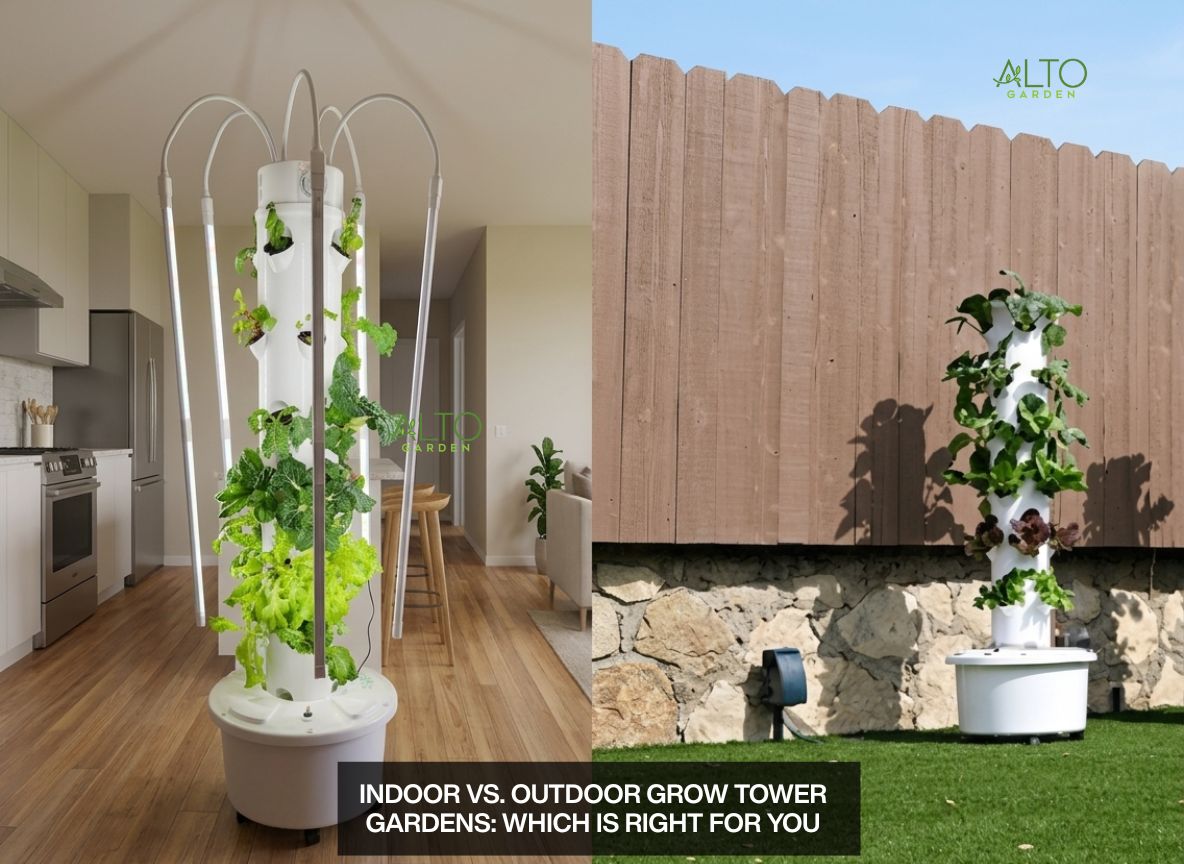
How a Tower Garden Works, Indoors or Out
A tower garden holds plants vertically around a column. A nutrient solution then drips over plant roots on an intermittent basis of say, 15 minutes every hour. The roots are suspended in air inside the tower. This provides the roots access to oxygen, which helps them grow faster. This principle is true whether the tower garden is indoors or outdoors.
The main difference between outdoor tower gardens is the environment around them. The light source, temperature, water source, and pest exposure are all different. If you get these things right, either type of tower garden can work well.

Outdoor Tower Gardens: Pros and Cons
Outdoor tower gardens have some advantages.
They get sunlight, which provides the light most plants need to grow well without increasing electricity costs. They also get rain, which can help replenish the water in the reservoir. The natural airflow outdoors helps prevent mold and fungal problems. Outdoor conditions also make it easier to grow larger crops like tomatoes, peppers, and cucumbers, and natural pollinators such as bees can improve fruit production.
However, outdoor tower gardens also have some disadvantages.
They are tied to the growing season, which means you can only grow plants for part of the year. They are also exposed to pests, as well as weather conditions like strong winds, heavy rain, extreme heat, and frost, which can affect plant growth.
Indoor Grow Towers: Pros and Cons
Indoor grow towers have some advantages.
They give you control over the temperature, light, and pests. This means you can grow plants all year round no matter what the weather is like outside. Indoor grow towers are also less exposed to pests, which makes them easier to maintain. They are ideal for growing herbs and leafy greens because these plants thrive in controlled indoor conditions.
However, indoor grow towers also have some disadvantages.
They require grow lights, which can increase electricity costs. They also require regular attention and maintenance since you have to control the temperature, humidity, airflow, and light. Indoor grow towers also have limited space, which makes them less suitable for larger plants like tomatoes and cucumbers.
Which Tower Garden Fits Your Situation
If you live somewhere with a long, mild growing season and you mainly want fresh produce in the warmer months without paying an electricity bill for it, an outdoor tower garden is the more efficient choice. You'll trade off-season availability for lower running costs and less daily management.
If you live somewhere with harsh winters or brutal summers, or you simply want consistent, predictable harvests no matter what the forecast says, an indoor grow tower earns back its higher upfront and running costs through year-round output.
This is precisely the gap ALTO Garden indoor hydroponic towers are built to close: integrated LED lighting on a built-in timer simplifies the light schedule, so you're not manually managing the one variable indoor growers struggle with most.
Plenty of growers end up running both: an outdoor tower garden for summer abundance and an indoor tower to keep herbs and greens coming through the months when the tower outside is dormant.
Final Thoughts
The decision to use an outdoor tower garden is not a universal one. The right choice depends on your climate, space, and what you want to achieve. Either type of tower garden can work well as long as you get the environment right.
FAQs
- Can I move my tower garden outside in summer and bring it back in for winter?
Yes, and many growers do exactly this. Just acclimate plants gradually over 5 to 7 days when moving them outdoors, since a sudden jump from stable indoor light to direct sun can scorch leaves that haven't built up tolerance. - Why are my outdoor tower garden's leaves turning yellow or stunted?
This is usually a nutrient or temperature issue rather than a light problem. Check that your nutrient solution's pH is in the 5.5–6.5 range and that overnight temperatures haven't dropped below 40°F, both common culprits outdoors that indoor growers don't have to worry about. - Do I need grow lights for an indoor tower garden, or can a sunny window work?
A sunny window alone rarely provides the 12 to 16 hours of consistent, even light most tower plants need, especially in winter when daylight hours are shorter. Supplemental grow lights are effectively required for reliable indoor results. - Is an indoor hydroponic tower worth it if I only want to grow herbs?
Yes. Herbs like basil, mint, and parsley are lower-light, lower-space crops that do especially well in a smaller indoor hydroponic tower, and they're precisely the category where year-round consistency pays off the most relative to cost. - What's the biggest mistake people make switching from outdoor to indoor growing?
Underestimating humidity and airflow. Outdoor air does this work automatically, but indoor growers can simply get a small fan to mimic the outdoor airflow.