Oct 21st 2026
How an Indoor Hydroponic Garden Can Reduce Grocery Costs
Growing your own herbs, leafy greens, and strawberries at home can cut your grocery spending. If you often buy fresh produce that spoils before you use it, grow your own indoor hydroponic garden. This will allow you to harvest what you need when you need it. Over the years, you will find less trips to the store and less food wasted.
Of course, starting your own garden is not always cheaper. You have to pay for the equipment, electricity, seeds, and fertilizers. This is where you’ll save the most on produce that’s not readily available at the store.
Here’s which crops give you the most value, what an indoor hydroponic garden costs, and what it takes to make growing at home worth it.
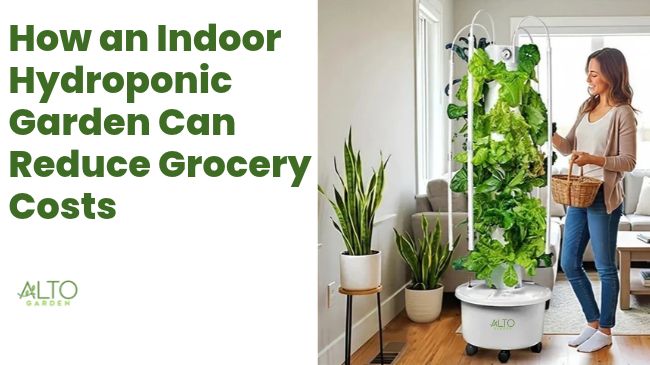
Where Grocery Money Goes on Fresh Produce
Some produce is more expensive than others. Fresh herbs, specialty greens, and strawberries can be pricey, especially when they are sold in small quantities.
Take a half-ounce package of fresh herbs at $1.78. That’s $3.56 per ounce, or $56.96 per pound. If you cook with fresh herbs several times a week, it adds up fast.
Waste makes it worse. You buy basil or parsley for one recipe, use a little, and toss the rest when it wilts. You paid for the whole bunch and used a small portion.
Both issues can be solved with a hydroponic indoor garden. Instead of buying a whole lot of plants, just pick some leaves, and you’re good to go.
This method is best for purchases you often make that you can’t finish but that keep well in the fridge.
How an Indoor Hydroponic Garden Can Lower Your Grocery Bill
The savings come from a few things, depending on what you grow, how often you harvest, and what you spend at the store.
1. Harvest Only What You Need
So are herbs. If you use basil in a recipe, you don’t need the entire bunch. Just choose a few leaves and harvest the plant.
Leafy greens work the same way. Cut only what you need for a salad, and you will have fewer vegetables sitting around in your refrigerator.
The homegrown plants still need care, and anything that you harvest but don’t eat will still spoil. The goal is to grow a useful amount, not a surplus.
2. Make Better Use of Your Growing Space
Hydroponics systems deliver water and dissolved nutrients straight to the roots without soil. Vertical towers stack planting spaces on top of each other.
ALTO Garden says its towers can support faster growth and higher yields under suitable conditions. Your actual results depend on the crop, lighting, temperature, nutrients, and how well you look after the plants.
A tower with 24 planting sites lets you grow a lot of plants in a small footprint. Picking productive crops and keeping every site in use helps you get the most out of that space.
3. Grow Fresh Produce Throughout the Year
Outdoor gardening follows the seasons and local weather conditions. In your indoor garden, you have more control, especially if you have a system that has the correct grow lights and timers.
So you can continue to grow herbs and leafy greens in the winter or during times when the outdoors is not ideal.
Choosing to grow throughout the year is great if you buy your fresh produce regularly. Lights and heating also use electricity, so be sure to add that to your cost of saving.
4. Reduce Produce Waste and Unnecessary Packaging
Stores sell produce in pre-packaged sizes. This makes it difficult to buy small amounts. Gardening allows you to choose when and how much to harvest.
A less costly option is to buy fewer dried herbs and greens in bags.
Hydroponics doesn’t mean no pesticides, and homegrown produce should still be handled and washed properly. But you do have a say in how you grow your plants and what products you use on them.

How Much Does an Indoor Hydroponic Garden Cost?
One of the biggest factors to consider is the initial cost. Indoor hydroponic towers range from $500 to $1,000, depending on size, features, and whether grow lights are included.
The ALTO Garden GX Hydroponic Tower, for example, comes with grow lights and basic supplies like net pots and rockwool cubes. Automated timers handle the watering and lighting schedule.
Check what’s in the box before you buy. A pricier tower may need more lighting or accessories. A set up that’s complete will cost more upfront but leave you with less items to purchase separately.
What About Monthly Running Costs?
The purchase price is only part of the picture. You’ll also pay for:
- Seeds. The cost depends on which crops you grow and how often you replant.
- Nutrients. Hydroponic plants need a nutrient solution to grow.
- Electricity. Pumps and grow lights use power, and lighting is often the biggest share.
- Water. Many systems recirculate it, but some is lost to evaporation, plant uptake, and maintenance.
Prices for systems vary greatly. Before you determine how much you can save, be sure to calculate how much electricity your lights and pump use and how much fruit you expect to harvest.
A garden sitting idle, or producing more than your family can eat, won’t produce the savings you expect.
The Math: Can a Hydroponic Tower Pay for Itself?
Here’s a simple example with a 24-site tower.
Say you grow lettuce, harvest it in cycles, and replant the empty sites. For this example, assume eight successful cycles in a year, with each site producing one usable head of lettuce per cycle.
24 plants × 8 cycles = 192 heads of lettuce per year.
This table shows what that lettuce might cost at the store.
| Store price per head | Annual retail value |
| $2.50 | $480 |
| $3.00 | $576 |
| $3.50 | $672 |
Those numbers are the potential retail value of the harvest, not guaranteed savings. They assume all 24 sites stay productive, every plant gives you a usable head, and the whole harvest replaces lettuce you would have bought anyway.
Real results may come in lower because of failed plants, slower growing cycles, or shifts in grocery prices.
What If You Grow Herbs Instead?
Herbs are another chance to trim your grocery bill, since small packages often cost so much per ounce.
Say you regularly buy three packages of fresh herbs a week at $1.78 each.
Three packages × $1.78 × 52 weeks = $277.68 per year.
That’s what those purchases cost annually if your habits and the package price don’t change. Growing enough herbs to replace those packages could save you some of that money.
The actual savings depend on how much your garden produces and how much you’d otherwise buy. And a tower full of lettuce can’t also grow the same harvest of herbs, so you need to account for the space you give each crop.
How Long Does It Take to Recover the Initial Cost?
A $500 tower is a very different place than a $1,000 tower. Your payback period is also affected by costs and how much of your harvest replaces store-bought produce.
You can estimate this by subtracting the cost of growing your crop each year from the value of the produce you’ll replace, and comparing that figure to the price of the system.
Say a garden produces $600 worth of replacement produce and costs $150 a year to run. That’s $450 in net savings per year, assuming the whole harvest replaces purchases you’d otherwise make. A $900 system would pay for itself in about two years.
That’s an illustration, not a promise. Your payback could be shorter or longer depending on yields, crop choices, electricity rates, and how consistently you use the garden.
The point is to work out your likely savings before you buy, rather than assuming the system will pay for itself on some fixed timeline.
Best Crops for Saving Money in Indoor Growing Systems
In most indoor growing systems, aim for plants where the store price per ounce is high and the plant grows fast in a tower.
- Herbs: Basil, dill, thyme, parsley, and cilantro are your best bets here because a little plant means lots of money-saving clamshells.
- Strawberries: High-priced at the grocery store and well-suited to growing in towers.
- Greens: Spring mix, butterhead, kale, spinach, and chard are all expensive compared to common head lettuce and quick-growing.
- Tomatoes and peppers: Only worth cultivating if you use them frequently and provide sufficient lighting.
Which Vegetables Should You Keep Buying?
Carrots, potatoes, and onions don’t suit vertical hydroponic towers built for leafy crops. They need different growing conditions and usually more room for their roots or bulbs to develop.
They’re also cheap and store well, so growing them indoors won’t save you as much as growing fresh herbs or specialty greens.
For most households, it makes more sense to focus on a few high-value crops than to try growing everything.
Tips to Get the Most Savings From Your Garden
- Stagger your planting. Plant new plants every couple of weeks so that the produce isn’t all ready at once.
- Start your own seeds. They’re a fraction of the price of buying plants from the nursery, and rockwool cubes make it easy to germinate.
- Run the timers as intended. An example would be 15 minutes every hour for 14 hours, with lights on for 14 to 16 hours a day.
- Grow what you’ll actually eat. If there’s no one in the house who eats kale, all those kale plants won’t save any money.
Final Thoughts
Your indoor hydroponic garden isn’t going to replace all the items you buy from the grocery store, nor will it make you money right away. However, it can take some of the costliest, most perishable foods off your grocery list and give you food that you can grow for mere pennies. Just choose crops that have a high cost per pound, fill every planter pot with them, and you’ll soon be able to justify owning an indoor hydroponic garden. The ALTO Garden GX Hydroponic Tower is designed for just this purpose.
Frequently Asked Questions
- How much can an indoor hydroponic garden save on groceries each year?
It depends on your crops and local prices. In the example above, one tower of lettuce is worth roughly $475 to $665 a year at store prices, and herbs can add a few hundred dollars more. - Is a hydroponic indoor growing system worth it for one person?
It can be if you focus on herbs and premium greens, since one person rarely finishes a whole clamshell before it wilts. Harvesting only what you need cuts waste, which matters most in a small household. - What are the ongoing costs of indoor growing systems?
Expect to pay for seeds, liquid nutrients, and electricity for the pump and lights. Water use is minimal, at less than a liter a day for a 24-plant tower, one reason indoor growing systems stay cheap to run. - Which crops save the most money?
Fresh herbs, strawberries, and specialty greens usually save the most, because they cost the most per ounce at the store. Cheap staples save less. - Do I need gardening experience to run one?
No. Indoor growing systems like this use automated timers for watering and lighting, and assembly takes about 20 minutes with no tools. Once the timers are set, growing is mostly automatic.