Aug 6th 2025
Benefits of Using a Hydroponic Garden Tower
Quick Summary: Hydroponic garden towers grow plants in a nutrient-rich water solution instead of soil, delivering minerals directly to roots through a closed-loop watering system. The payoff is faster growth, 95% less water use, no pesticides, and the ability to grow year-round in under 3 square feet. Most systems are automated through timers, so no farming experience is needed. A tower with 24 plants uses less than a liter of water per day. Beyond the practical side, they double as a functional piece for any room and work well for families or anyone looking for a low-stress way to grow their own food at home.
Hydroponics is the process of cultivating plants in a water-based nutrient solution rather than soil. The process guarantees that plants receive the necessary elements and nutrients directly through their roots. Hydroponic gardens accomplish this by using dissolving nutrients in the water system, so the plant roots receive an exact mixture of the required minerals directly. This process not only speeds up growth but also maximizes water efficiency.
Hydroponic systems enjoy water savings up to 95% when compared to traditional soil-based gardening! Efficiency comes by utilizing recirculation and reuse of water, hence making it eco-friendly.
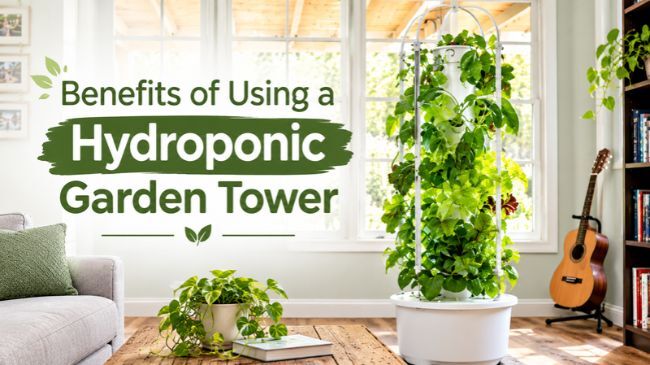
Why Use an Indoor Hydroponic Tower for Your Home
Hydroponic garden towers are increasingly becoming popular as a method of growing plants with soil-less methods. Why use an indoor hydroponic garden tower? This blog entry will talk about some of its advantages, so you understand fully what differentiates them from other growing methods.

Hydroponic Garden Tower Systems
Hydroponic tower systems grow plants by utilizing a water solution rich in nutrients. They are also referred to aeroponic towers, since plant roots are suspended in air while from time to time an aqueous solution is pumped to supply them with the nutrients they need. While normally installed indoors, hydroponic garden towers can also be installed outdoors in warmer locations.
Numerous crops such as strawberries, lettuce, Swiss chard, herbs, spinach, kale, broccoli, and flowering petunias can be grown. These growing systems range in price from $500 to $1,000 or more. If lights are placed on top of the tower, it can also be employed to plant vegetables indoors, which is popular in cities with limited gardening space. The concept of vertical farming is a reality through hydroponic towers!
Even without having a conventional garden, you can still grow plenty of plants due to these smart solutions. Aside from space saving, hydroponic towers also give any space a touch of modern, sculpture-like sophistication. They feed nutrients directly to plant roots for quicker growth using the same water-saving principles as conventional hydroponics.
How do Garden Towers Work?
Hydroponics is based on giving plants what they require, when they require it. Seedlings germinated in rockwool are placed in net pots and given nutrient water in hydroponics. It provides extremely accurate control over environmental conditions such as temperature and pH levels, which leads to quicker and healthier plant growth. Indoor hydroponic garden towers provide precise control of light intensity and duration, and pH levels can be tested and controlled. Seedlings grow faster without the mechanical hindrance of soil, with healthier fruits and vegetables.
Hydroponics also reduces the incidence of diseases and pests, a common issue in outdoor growing. Through environmental control, negative factors are removed, and plants are able to grow at a rapid and healthy rate. Hydroponics removes the uncertainty of outdoor plant culture, allowing for faster and more precise crop production. Hydroponics allows plants to exist without the risks of traditional soil-grown culture.
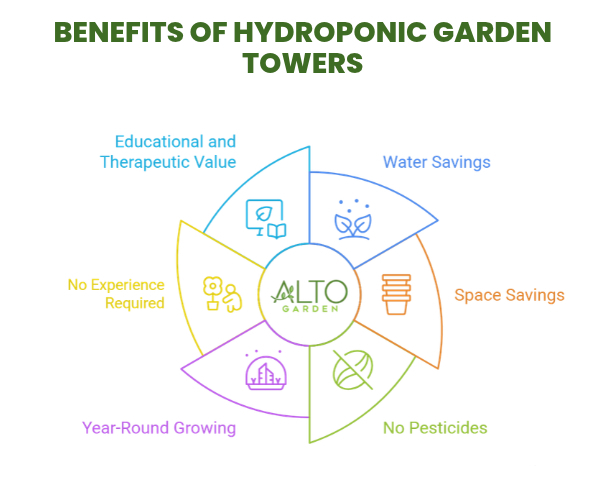
Benefits of Hydroponic Garden Towers
Water Savings
Compared to traditional soil gardens, cultivating fruits and vegetables in a garden tower consumes 95% less water. This is surely the best farm technology for areas with limited water supply. When watering soil, most of the water is lost in the ground. On average, a garden tower with 24 plants consumes less than a liter per day, depending on the conditions and crops.

Space Savings
By growing vertically, these systems have a very small footprint. You can grow dozens of plants in less than 3 square feet. This makes it great for people who don’t have a yard and want to grow indoors, or on their balcony.
No Pesticides
When growing indoors or in a controlled environment – you don’t need to spray chemicals or pesticides on your plants. Vegetables with healthy nutrient content and antioxidant value also translate to vegetables with a higher natural defense system. This provides you with total control of what you are consuming.
Year-Round Growing
Whether its winter or summer, a hydroponic tower allows you to grow fresh veggies and herbs year-round.
No Experience Required
A hydroponic garden tower can be run successfully by an individual with no background in farming or gardening. Aeroponic technology is the only one that produces professional outcomes without requiring prior experience in the agricultural industry.
Educational and Therapeutic Value
Working with an indoor hydroponic garden tower isn't only convenient it's also rewarding. Seeing your plants grow from seeds to harvest is rewarding and informative. It's an excellent activity for families, particularly kids, to learn about biology, sustainability, and healthy eating. In addition, working on a hydro garden tower can be highly therapeutic. Gardening has been proven to decrease stress, enhance mood, and enhance mental health.
Grow More with Less Space, Less Water, Less Work
A hydroponic tower holds dozens of plants in under 3 square feet, runs automatically on timers, and uses 95% less water than soil gardening. No yard, no experience, no pesticides required.
Shop NowFinal Thoughts
In summary, garden towers provide a unique set of advantages. Your gardening needs, resources available, and preferences will be of prime importance when considering if these indoor planting systems are right for you. Factors to consider are the plants you wish to grow, maintenance that you can handle, and your budget.
A hybrid approach can give you the best of both worlds when choosing between garden towers or other hydroponic techniques. Your ultimate hydroponic indoor garden could be determined by how accommodating it is. Ideally you would discover a balanced gardening system that maximizes plant variety and productivity, yet offers the high yields and efficiencies of hydroponic towers.
FAQs
- What are the benefits of using a hydroponic garden tower as opposed to traditional gardening in soil?
They can be summed up in three points. First of all, water consumption becomes minimal – only about 5-10% of the amount that traditional methods of growing use. Second, hydroponics allow for faster growth, as the plants do not have to search for their nutrition in the soil but receive all the needed elements right away. Third, the environment indoors allows for minimizing the influence of pests and diseases. - How much space does a hydroponic tower take up?
A hydroponic tower occupies under 3 square feet of floor space. Height substitutes area, so a tower that contains 24 plants or more can fit easily on a balcony, a porch, or even in a living room. - Will I need any gardening experience in order to use a hydroponic tower?
No, you will not. As watering and lighting work automatically on the basis of a timer, the only thing left for the user to do is to monitor the level of nutrients and the water and harvest the product. - Can a hydroponic tower provide you with fresh products year-round?
Yes, you can enjoy fresh vegetables during the whole year, which gives hydroponic towers an advantage over traditional gardening, as indoor conditions mean that you are independent from external factors like weather. - Are the vegetables grown with hydroponic towers pesticide-free?
When vegetables grow indoors inside your home, there is no need for pesticides. Since hydroponics does not use soil, this also means there are no soil-borne pests.