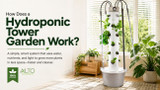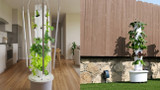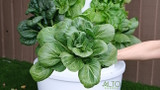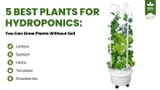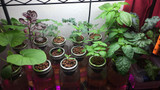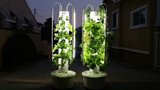

Hydroponics is a method of growing plants indoors with nutrient-rich water without the need for soil. This system has gained popularity due to its various advantages, which include lowering fertilize
…
Compared to growing in soil, most herbs cultivated hydroponically in a grow tower result in faster-growing crops with better nutritional value. Knowing which crops thrive in a hydroponic tower can he
…
In recent years, it has become increasingly popular to grow your own food at home, and for good reason. The benefits range from healthy vegetables to fresh herbs, so it’s no surprise the practic
…
Remove a plant from soil, and a lot of people will say it'll die after just a few days. However, hydroponic gardening proves otherwise. There is no soil used instead, the roots of a plant are soaked i
…
Nowadays, growing your own food inside is more than just a clever pastime; it's a sensible way to eat healthily, cut down on waste, and take back control of your diet. Additionally, learning more abo
…
For people without a yard or a lot of outside space, indoor gardening is an excellent choice. Year-round leafy greens, defense against disease, sunburn, early bolting, and pests are among the many of
…
Outdoor tower gardens use natural sunlight which plants love, so they use less electricity. However, outdoor tower gardens limit your growing season and expose you to pests, wind, and temperatur
…
For seed germination to be effective, a significant amount of work and attention are essential. In order for those seeds to grow to their full potential, the ideal temperature, moisture content, and
…
Without the need for soil, aeroponic farming is transforming the production of fresh, nutritious crops. It should come as no surprise that this innovative method of growing is gaining popularity give
…
Do you know what bok choy is? It's a tasty, nutritious, and flavorful Chinese vegetable. However, did you know that hydroponics and aeroponics make it simple to produce at home?
Chinese cabbage, or b
…
For gardeners, especially those who enjoy growing their own herbs, summer is a great season. The long, bright days are ideal for growing a wide range of tasty herbs and veggies at home. Even if
…
Contrary to popular belief, indoor plants can thrive without soil. They will flourish in soil-free pots as long as we provide them the nutrients they require. With hydroponic techniques, media like r
…
With a tower garden, nutrient-rich water is directed to flow through the system, giving plants what they require to flourish. In addition to saving space, this kind of hydroponic system also encourag
…
It's thrilling to begin your hydroponic adventure, but like any new endeavor, there will be a learning curve. Many beginners make basic blunders that lead to lower production and slow down plant deve
…
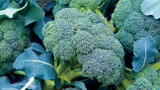
Growing broccoli hydroponically is one of the most effective methods to incorporate a nutritious and tasty vegetable into your diet when soil is not accessible. Hydroponic crops require less room and
…
Algae can sometimes be challenging to manage when growing with hydroponic systems. One of the most effective defenses for most growers is prevention by light exclusion from the nutrient solution, res
…
Growing vegetables with a vertical tower garden can make you feel nervous and overwhelmed, specifically if you are trying it for the first time. You’re in for a treat if you’re one of the
…
How important is it that young, delicate seedlings are placed under a grow light as soon as they sprout? For indoor seed starting, it’s critical. Consistent illumination causes plants to grow q
…
In aeroponic farming, nutrient-rich water is delivered directly to plant roots while the roots themselves are suspended in air. The upper part of the plant is kept in light, while the roots are
…
By using nutrient-rich water, hydroponics allows you to grow plants without the need for soil, resulting in increased yields, quicker growth, and significant water savings. Hydroponics provides a spa
…
Spinach: A garden crop that is simple to grow and has many health advantages. Sadly, a lot of gardeners reside in places where spinach can only be grown in the spring and fall. Some gardeners have at
…
Hydroponics is a sort of soil-less gardening that can be done both indoors and outdoors. It's an excellent choice for those with limited gardening area or who wish to cultivate herbs and veggies duri
…
Hydroponics towers are transforming small-scale farming and urban gardening by providing an effective and sustainable way to raise fresh vegetables all year round. These vertical gardening systems ar
…
Compared to conventional gardening methods, vertical gardening uses less room to cultivate plants and is more water-efficient. In its most basic form, vertical gardening is a gardening technique in w
…
Originating in the middle and eastern Mediterranean, parsley is used in salads and as a vegetable in a variety of soups and stews. Due to its large leaves, Italian parsley is the more frequent of the
…
Hydroponic towers' capacity to maximize the flow of nutrients and water is what makes them so amazing. Whereas plants on soil have to work hard to get nutrients, in a hydroponic system, everything th
…
Plants in hydroponic systems are entirely dependent on nutritional solutions for growth. For this reason, choosing the appropriate hydroponic nutritional supplements is essential to the development o
…
An inventive twist on conventional gardening, aeroponic towers optimize productivity and development potential. If you're thinking about using them in your own gardening arrangement, this tutorial wi
…
Known for its health advantages, kale is a powerful source of vital vitamins and minerals. Compared to conventional soil-based farming, hydroponic kale requires less room and upkeep and grows more qu
…
If you had a strawberry patch you could return to time and time again, wouldn't that be wonderful? You can grow strawberries hydroponically in your home, on your porch, or even inside your garage. St
…
Hydroponics is the process of cultivating plants in a water-based nutrient solution rather than soil. The process guarantees that plants receive the necessary elements and nutrients, directly through
…
Hydroponics is a fast-growing gardening technique that enables plants to flourish without soil. Compared to conventional soil-based gardening, hydroponics offers several benefits, such as increased y
…
We all take light for granted until you start gardening, especially with indoor hydroponics as you begin to understand the true value of sunlight. Nothing can be grown in the dark. Light is essential
…
Nothing compares to the flavor of freshly picked greens right out of the garden. That is a spring-through-fall delight for most of us. On the other hand, those who enjoy salads can grow lettuce indoo
…
To transform your area from mediocre to spectacular, a clever and imaginative vertical garden might be exactly what you need. Plants that are raised, towered up, encouraged to climb, or staggered ver
…
With its many benefits over conventional soil-based agriculture, hydroponic farming is a growingly popular cultivation technique. Keeping nutrient solutions' pH levels at ideal levels is essential to
…
Imagine being able to cultivate nutrient-dense, fresh vegetables in your own house without having to deal with the inconveniences of conventional gardening. From people living in cities to profession
…
Hydroponic tomatoes grow 30-50% faster than soil-grown ones and can be ready in as little as 60 days. The setup follows eight steps: pick a system, choose your variety, select a growing medium, mix n
…
Five crops worth starting with in hydroponics: lettuce, spinach, herbs, strawberries, and tomatoes. Lettuce is the fastest, usually ready in 30 days, and the most forgiving for beginners. Spinach tak
…
Peppers are one of the better fruiting crops to move indoors. No soil means no fungus gnats, no root rot from bad drainage, and no waiting on outdoor growing seasons. The setup follows the same basic
…
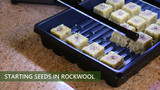
Quick Summary: Rockwool is spun molten rock compressed into cubes, and it works as a soil replacement in hydroponics because it holds moisture without drowning roots. Soak the cubes for 10 minutes, dr
…
By using nutrient-rich water solutions to provide vital minerals straight to the plant roots, hydroponics allows plants to be grown without soil. By doing away with the need for conventional soil-bas
…
The Indoor AG Convention https://indoor.ag/ is an annual trade show specializing in controlled environment agriculture (CEA) and vertical farming. Growers, vendors, suppliers and other stakehold
…
Are you considering getting into vertical gardening? Setting up a vertical garden is a satisfying experience, regardless of whether you're an urban dweller with limited space or simply want to add so
…
Compared to other hydroponically produced vegetables, spinach is easier to grow and straightforward to cultivate. A few prerequisites must be fulfilled in order to cultivate robust hydroponic spinach
…
Cucumbers are a little more demanding than most hydroponic crops, but they're worth the effort. They need 16 hours of light, a pH between 5.8 and 6.0, and temps in the 65-95°F range to hit the
…
Just because you live in the city doesn’t mean you have to give up gardening. With vertical gardening, even the smallest balcony, patio, or corner of your home can become a thriving green spac
…
Quick Summary: A hydroponic tower works by pumping nutrient water from a reservoir at the base up through the tower, where it trickles back down past the roots and collects to start the loop again. Se
…
These days, growing veggies, berries, or greens inside is simpler than ever before. Regardless of the weather, you can have fresh vegetables at home year-round by establishing a hydroponic or aeropo
…
Quick Summary
Germination speed comes down to what you're growing. Veggies are quick, usually sprouting within a few days. Flowers and herbs take their time, and can take 10 days or more. The real le
…
Hydroponic tower gardens work best with leafy greens and herbs. Lettuce, spinach, arugula, kale, basil, mint, cilantro, and parsley are all strong performers, they grow fast, need minimal space, and
…
Quick Answer
A hydroponic tower grows plants without soil by feeding nutrients directly through water. Indoors, LED grow lights replace sunlight and keep plants thriving year-round
…
Quick SummaryVertical hydroponics stacks plants upward instead of spreading them out, and that one shift changes a lot. You use up to 95% less water than regular soil farming, fit far more plants i
…
For centuries, planting crops meant putting seeds or seedlings in the ground. But with the advent of hydroponics, rockwool has become more and more popular as the perfect media for soil-less growing.
…
Hydroponic garden towers are growing in popularity as a way to raise plants using soil-less techniques. Why should you choose an indoor hydroponic garden tower? This blog post will discuss some of its
…
You've probably heard the craze for vertical greenhouses and hydroponic gardening if you've been in the agricultural or ag-tech industries lately. However, why are these expanding strategies such hot
…
Although the methods and resources needed for hydroponic grow systems and conventional soil-based farming are very different, both strive to produce crops effectively and with as little negative influ
…
A nutrient-rich solution with water is the common basis used in all hydroponics, a growingly popular technique for growing plants that eliminates the need for soil. There are few different types of hy
…
Often called "rocket" or "roquette," arugula is a leafy green that grows swiftly in cold regions and adds an acidic, mustard-like flavor to salads. Arugula is native to Turkey, western Asia, and the
…
Basil is at the top of many lists for favorite herbs to grow in the garden. Emily (Genovese) basil, Thai basil, and purple basil are some popular types. It’s also a very useful herb that can be
…
Firstly, you’ll know exactly how your food
was grown – pesticide and herbicide free.
Buying commercially grown food is risky
since chemicals are often used, and there
is risk of parasite and bacterial contamination
during processing and transport.
Taylor Farms’ cyclospora and salmonella
outbreaks in 2026 are an example.
What can I grow in an ALTO Garden Tower?
You can grow fresh leafy greens, vegetables,
herbs and some fruits.
Examples include lettuce, spinach, kale,
chard, and cabbages like bok choy.
Herbs like parsley, basil, dill, thyme and
rosemary all do well.
Tomatoes, cucumbers, peppers and strawberries
are some examples of fruits you can grow.
It’s worth noting – root vegetables are not
good candidates for hydroponic towers.
Since root vegetables grow downward, they are
difficult to harvest from inside the system.
Examples of root vegetables include carrots,
potatoes and onions.
What are other benefits of growing with hydroponic towers?
Since hydroponic growing does not require soil,
the system is very clean which makes it easy
to use indoors.
Hydroponic towers utilize closed-loop watering,
recycling water up and down the system.
This leads to 95% water savings compared to
traditional gardening.
You can also expect faster growth and greater
yields. Nutrients are delivered straight to
plant roots, so roots don’t need to spend
energy looking for them.
Instead, plants can focus more energy on
growing and fruiting.
Vertical towers also have a very small footprint!
In just 3 square feet, you can grow dozens and
dozens of plants.
Do I need gardening experience?
No, you don’t need any gardening experience
to grow with hydroponic towers.
Hydroponic towers are highly automated through
the use of timers.
Watering should run on set intervals of say,
15 minutes per hour for 14 hours. Lighting
should run continuously for 14–16 hours.
Once your timers are set, growing becomes
automatic!
What about seedlings?
Upon ordering your tower, you’ll want to get
seeds from your local Home Depot, nursery or
online.